
For importers receiving a full truckload, this stage requires some preparation. If the warehouse is not ready, the driver may have to wait, unloading can take longer than expected, and the receiving team may struggle to handle the cargo efficiently.
This is particularly important for businesses importing goods over long distances, such as China–Russia road freight shipments.
A little preparation before the truck arrives can make the entire delivery process much smoother.
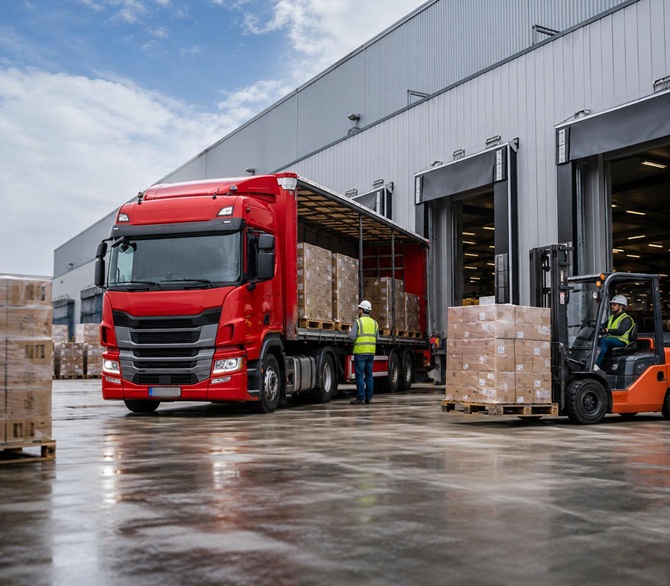
The first thing to check is whether the delivery location can accommodate the arriving vehicle.
International freight trucks carrying full loads need sufficient space for:
Truck access and turning.
Parking or positioning near the unloading area.
Opening the trailer doors safely.
Forklift or pallet truck operations.
Temporary cargo placement during unloading.
This may sound obvious, but warehouse access is sometimes overlooked when delivery arrangements are made.
For example, a warehouse located in a busy industrial area may have limited vehicle access during certain hours. If several trucks arrive at the same time, available unloading space can become a problem.
Before dispatch, importers should confirm the exact warehouse address, entrance instructions, vehicle restrictions, and available unloading space with the receiving team.
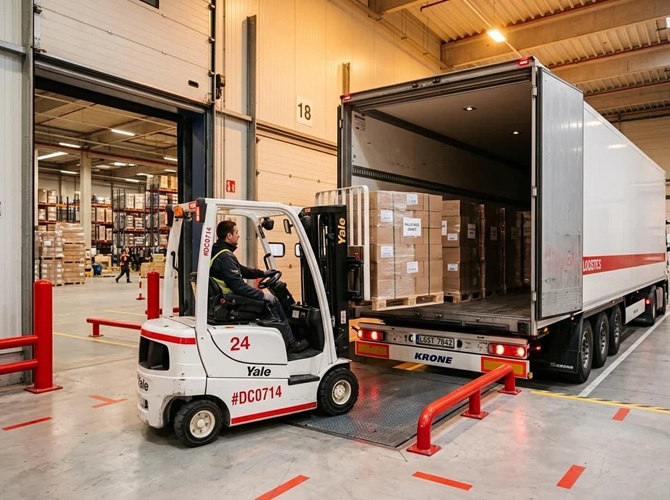
Not every shipment can be unloaded in the same way.
Palletized goods are generally easier to handle when a suitable forklift is available. However, the equipment must match the cargo's weight, dimensions, and packaging.
Consider the following before the truck arrives:
Forklift: Check its rated lifting capacity against the heaviest pallet.
Pallet truck: Useful for moving pallets across a level warehouse floor.
Loading dock: Make sure the dock is suitable for the arriving vehicle.
Dock leveller: Check that it is available and suitable for the vehicle and equipment being used.
Manual handling: Arrange enough workers if some goods need to be unloaded manually.
One important point is that having a forklift available does not automatically mean unloading can begin. The forklift must be suitable for the load, and its operator must be properly trained.
The US Occupational Safety and Health Administration (OSHA) provides practical guidance on safe forklift operations and loading docks.
A truck should not arrive at the warehouse only to find that nobody is available to receive the goods.
The warehouse manager should arrange the receiving team in advance and make sure everyone understands their responsibilities.
For example:
One person coordinates the arrival and communicates with the driver.
Forklift operators handle palletized cargo.
Warehouse workers assist with unloading and positioning goods.
A receiving employee checks the delivered quantities against the shipping documents.
For larger shipments, it is useful to assign one person to coordinate the entire unloading process.
This reduces unnecessary communication and helps prevent confusion when multiple pallets or different product types are involved.
International truck deliveries involve long-distance transportation, border procedures, and changing road conditions. The estimated arrival time should therefore be treated as a planning reference rather than an exact appointment unless a confirmed delivery slot has been agreed.
Importers should stay in contact with their freight forwarder and warehouse team as the shipment approaches its destination.
Before delivery, confirm:
The warehouse's receiving hours.
The person responsible for accepting the shipment.
Whether unloading appointments are required.
Whether there are restrictions on evening or weekend deliveries.
What to do if the truck arrives earlier or later than expected.
This is especially important for warehouses that operate with limited receiving hours.
If the receiving team is only available during the morning, for example, an arrival later in the day may require a revised unloading arrangement.
Unloading is only one part of the job. The goods also need somewhere to go once they leave the truck.
Before delivery, make sure there is enough warehouse space for the incoming shipment.
It helps to know:
How many pallets or packages are expected.
The approximate dimensions of the cargo.
Whether different products need separate storage areas.
Which goods need priority handling.
Whether the cargo requires special storage conditions.
For example, a shipment containing household appliances may need designated space for cartons that should remain upright. Industrial components may require stronger floor support or separate storage arrangements.
If the warehouse is already full, receiving a complete truckload can become difficult even when the unloading equipment and staff are available.
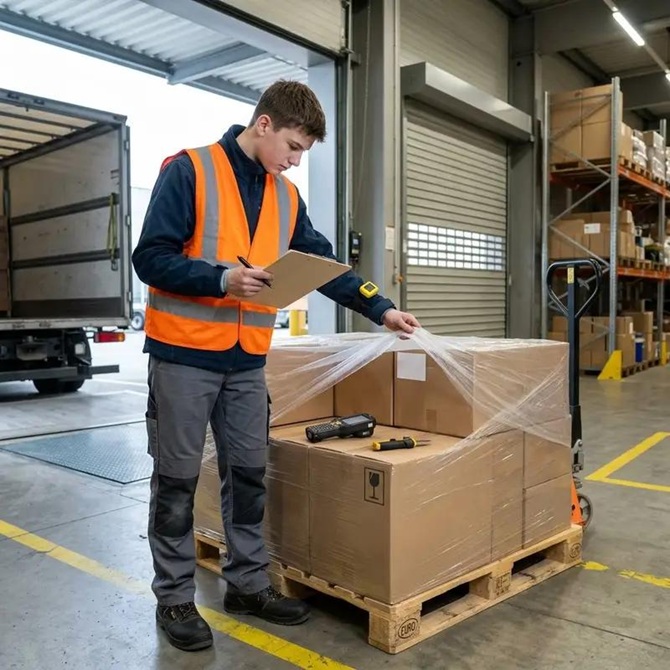
The receiving team should know what cargo is expected before the vehicle arrives.
At a minimum, prepare the relevant shipment information, such as:
Commercial invoice, where applicable.
Packing list.
CMR consignment note for international road transport.
Expected package and pallet quantities.
Any special handling instructions.
The exact documents required will depend on the shipment, customs arrangements, and the parties involved.
The warehouse team should understand which documents need to be checked and who is responsible for signing the delivery records.
It is also useful to agree in advance how discrepancies will be reported. If the received quantity does not match the expected quantity, the issue should be recorded and communicated before the delivery is closed.
Even with good preparation, unexpected situations can happen.
The warehouse may become temporarily unavailable. Equipment may break down, or the receiving team may not be ready when the vehicle arrives.
Importers should discuss these possibilities with their freight forwarder before dispatch.
In particular, clarify:
Who should be contacted if unloading cannot begin.
Whether the vehicle can wait at the delivery location.
Whether an alternative unloading time can be arranged.
How additional waiting or redelivery costs will be handled.
These details should be agreed in advance rather than discussed for the first time when the truck is already at the warehouse.
Warehouse preparation is not just a theoretical recommendation. It is part of how an international delivery works in practice.
In one published DR Trans shipment case, a full truckload of vacuum cleaners and steam cleaners was transported from a factory in Suzhou to a warehouse near Moscow.
The shipment travelled by TIR road transport and arrived in 10 days. The receiving team was ready to unload when the truck reached the warehouse. The cargo was unloaded without reported damage, and the delivery was completed as planned.
You can read the full case study here:
Shipping Home Appliances from China to Russia in 10 Days | DR Trans
The case illustrates an important point: successful delivery depends not only on the journey itself, but also on coordination at the destination.
A suitable vehicle, clear delivery information, and a warehouse team ready to receive the goods all contribute to a smoother operation.
Before the truck reaches your warehouse, check the following:
The warehouse address and vehicle access have been confirmed.
There is enough space for the truck to enter and unload.
Forklifts or other necessary equipment are available.
Warehouse staff have been assigned.
The delivery time and receiving hours have been confirmed.
Storage space has been reserved for the incoming cargo.
Shipment documents and expected quantities are ready.
A contact person is available to coordinate the delivery.
If these points are covered, the receiving process is much easier to manage.
At DR Trans, we understand that international transportation involves more than moving cargo from one country to another. Delivery coordination and communication with the receiving side are also important parts of the process.
Our TIR truck transport services connect China with Russia and other international destinations. With our own fleet, GPS tracking, and logistics coordination, we help importers manage their shipments throughout the transportation process.
If you are planning a shipment from China to Russia, share your cargo details, loading location, and destination warehouse with our team.
We can help you discuss a suitable transportation arrangement and coordinate the delivery requirements in advance.
Contact DR Trans to discuss your next shipment.

 IPv6 ПОДДЕРЖИВАЕТСЯ СЕТЬЮ