Executive Summary: China–Russia rail transport offers a fast, mid‑cost option for heavy cargo, but it can hide many extra fees. Aside from the base freight, shippers must account for customs duties and VAT, port and border handling charges, documentation fees, and surcharges (fuel, winter, etc.). These hidden costs can add 10–30% (or more) to your total shipping bill. This report breaks down typical cost elements (see Table 1), highlights border‑specific fees and operating surcharges, and provides practical avoidance strategies (e.g., choosing DDP service, consolidating cargo, and accurate documentation).
Key Hidden Costs in China–Russia Rail Freight
China–Russia rail shipments face several non‑obvious charges beyond the contract freight rate. Many shippers assume “rail is only X dollars per container,” but in practice, the total cost includes:
- Customs duties and taxes: Any import into Russia incurs duty (often 5–20% of value, depending on product type) and 20% VAT on the customs value. For example, many consumer goods pay 5–10% duty plus 20% VAT. In addition, there are fixed customs clearance fees (a few dollars per declaration). These mandatory taxes must be budgeted or paid through service options (e.g., Delivered Duty Paid). Not planning for them can make a low freight quote suddenly expensive.
- Border handling and transshipment: China uses standard gauge (1435 mm) while Russia uses broad gauge (1520 mm). At border crossings (e.g., Alashankou, Erlian, Manzhouli), containers often require a gauge change or container transfer. This means either lifting containers from one train to another or swapping bogies, both of which involve cranes and labor. Those operations incur port/terminal handling charges and add time. Industry analysts note that “gauge differences require either bogie exchange, transloading between wagons, or container transfer,” which raises costs and potential delays.
- Surcharges and extra fees: Carriers may apply various surcharges on top of base rates. Common examples include fuel surcharges, seasonal (winter) surcharges, or security/facility fees at terminals. Each container booking might also carry documentation fees (e.g., $50–100) and handling fees at origin/destination terminals. These are often “hidden” in that they are not obvious in a simple freight rate. For instance, a transport consultant warns that hidden fees may include terminal handling charges, customs inspection fees, storage charges, and documentation fees.
- Insurance and risk fees: While optional, cargo insurance can be costly if the shipper chooses to insure valuables. Additionally, rail carriers or forwarders sometimes charge premiums for high-risk or high-value goods (for example, requiring more secure handling). Failure to include adequate insurance (in an attempt to cut obvious costs) is itself a risk.
- Demurrage and storage: If containers sit idle at a yard or port beyond free time (due to delays or missed pickup), demurrage fees accrue quickly (often tens of dollars per container per day). For example, Russian customs warehouses charge roughly $5–$22 per container per day after the free period. In practice, any hold-up—be it paperwork delays or transport rerouting—can trigger these fees.
Each of these categories, individually or together, can inflate the landed cost. Below is a cost breakdown table for a typical China–Russia rail shipment, illustrating baseline vs. additional fees:
| Cost Item |
Who Charges |
Typical Amount |
Notes / Mitigation |
| Base rail freight |
Rail operator/freight co. |
e.g. $3,000 per 40-ft container (Yiwu–Moscow) |
Core transport fee quoted upfront. Can be negotiated on volume. |
| Customs duty (Russia) |
Russian Customs |
5%–20% of declared value |
Mandatory. Classify goods accurately to avoid higher rates. |
| Russian VAT (20%) |
Russian Customs |
20% of (value + duty) |
Mandatory. Option: DR Trans offers DDP service to pre-pay duties. |
| Chinese export docs fee |
Chinese Customs / Agent |
~CNY 100–150 per shipment |
For the bill of lading, declaration forms. A fixed administrative cost. |
| Terminal Handling (THC) |
Border terminals (China/RU) |
$100–200 per container |
For loading/unloading containers at terminals/borders. |
| Customs broker fee |
Russian broker/agent |
$50–$300 per container |
Most shippers hire a broker to streamline clearance, rather than risk delays. |
| Fuel/energy surcharge |
Carrier |
Varies (see contract) |
Fluctuates with oil prices. |
| Seasonal surcharge |
Carrier |
5%–20% of freight |
Often applied in winter for heating railcars or in peak season. |
| Documentation fee |
Forwarder/Carrier |
$50–$150 per shipment |
For preparing and processing export/import papers. |
| Inspection/scanning |
Customs/yard authority |
$50–$150 per container |
China or Russia may scan shipments; the fee depends on the cargo/type. |
| Storage/demurrage |
Port/yard operator |
$5–$22 per container/day |
If clearance is delayed, costs pile up each extra day. |
Table 1: Typical cost components in a China–Russia rail shipment (aside from base freight).
The figures above are illustrative. For exact costs, one must get a detailed quote. In any case, items like customs duties, VAT, and handling fees are essentially unavoidable. The key to avoiding surprises is knowing them in advance and planning (see section “How to Avoid…” below).
Border Crossing and Gauge-Change Costs
China–Russia rail routes often pass through key inland hubs or neighboring countries like Kazakhstan (especially on routes bypassing transit controls). Two specific border‑related costs are noteworthy:
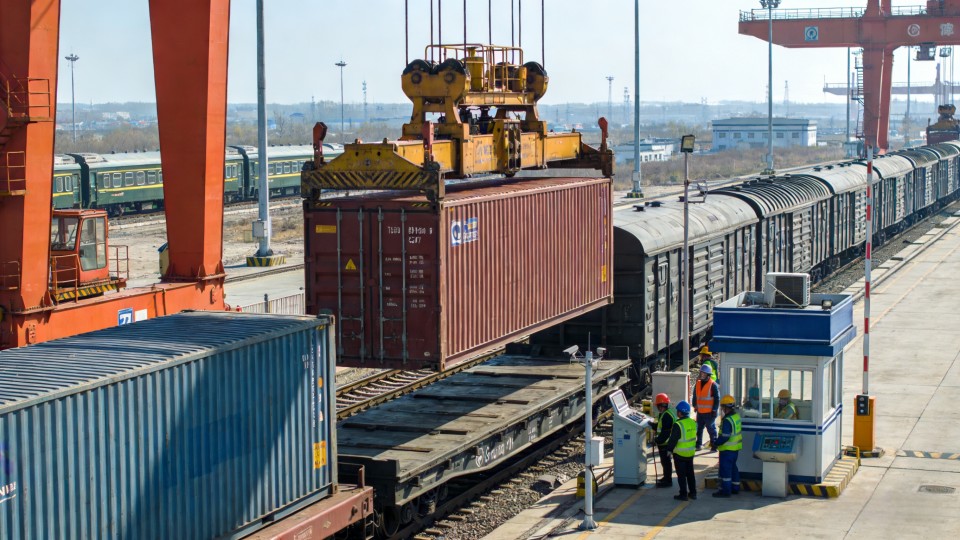
- Gauge change/transloading fees: As noted, track gauge changes mean containers must be transferred. This is usually done by crane or specialized bogie-changing equipment. Each transfer attracts a handling fee. For example, at a busy port like Manzhouli, there are dedicated yards and cranes, and each container transfer may cost on the order of $50–$100 (varying by terminal). These are built into the freight rate to Russia – carriers may list a “gauge change fee” or “transshipment fee.” The exact amount varies by route and volume. Operators have invested in faster cranes to cut time, but the manpower and machinery have a cost that ultimately appears in the price.
- Border clearance/inspections: At the China-Kazakhstan or China-Russia border, customs conduct exit and entry inspections. While many shipments go through joint or split-screen checks, any unexpected detours (like an unusually thorough X-ray scan or cargo exam) can mean additional fees or delays. In some cases, private agents have emerged that offer to “expedite” a train’s crossing by paying local fees. Industry reports note cases where an extra $700–$1,000 per container was charged to bypass inspections. Shippers should be aware that such fees (effectively bribes or paid permits) exist on crowded borders, and insist on legitimate procedures.
In summary, border crossing is both a time risk and a cost center. The best mitigation is careful scheduling (off-peak season), use of formal corridors (less prone to informal charges), and engaging a forwarder to manage paperwork (see below).
Port, Terminal, and Documentation Fees
Once in transit, additional fees may appear at ports or intermediate terminals:
- Terminal Handling Charges (THC): This covers container movement at the port. Both origin and destination terminals add a fee for lifting containers on/off trains. Many lines advertise a “door-to-door” or FOB service with “no extra THC”, but in reality, these charges exist. Always clarify if your quoted rate is all-inclusive. A transparent forwarder will detail, for example, “$150 per container port handling included.”
- Documentation fees: Preparing the export/import paperwork, bills of lading, invoices, and any certificates incurs labor. Freight forwarders or carriers often charge $50–$150 per container for document processing. This can be higher for specialized cargo (e.g., requiring certificates). When getting quotes, ensure this is listed or ask for “documentation cost” separately.
- Security or miscellaneous fees: Some rail routes require insurance, security seals, or scanning. For example, a sealed container guarantee might cost $30–$50. Others may charge for facility use or a “rail cargo security fee.” While each is relatively small, together they become part of the hidden cost puzzle.
- Currency exchange and payment fees: If freight is priced in USD or RMB, fluctuating exchange rates can change the effective cost by several percent. Also, banks may add transfer fees. Budget accordingly or negotiate contracts in your preferred currency.
In short, beyond customs and transit, every stage (origin terminal, destination terminal, broker) may tack on fees. A checklist of avoidable pitfalls is shown in Table 2.
| Hidden Fee |
Typical Charge |
Avoidance Tip |
| Unclear THC in quote |
$100–$200 per container |
Demand a “door-to-door” all-inclusive quote. |
| Omitted documentation fees |
$50–$150 per shipment |
Ask for “documentation cost included” or itemized. |
| Unspecified surcharges |
Varies |
Clarify any seasonal or fuel surcharges up front. |
| Broker/agent markups |
5–10% of the cost |
Use DR Trans expertise – we vet and include broker fees in quotes. |
| Late pickup/demurrage |
$5–$22 per day/container |
Schedule transport tightly; DR Trans tracks shipments to prevent delays. |
| Route detours |
Added transit cost/time |
Plan path wisely (e.g., use direct freight corridors, not circular routes). |
| Currency conversion swings |
1–3% of the cost difference |
Lock in rates where possible; negotiate a currency clause. |
Table 2: Common hidden fees and tips to avoid them.
How to Avoid Hidden Rail Freight Costs
Shippers can take proactive steps to reduce surprises:
- Consolidate and Compare: Group your goods into full containers (FCL) if possible. This amortizes fixed fees (THC, docs, etc.) over more volume. If only part loads, consider professional LCL consolidation to avoid multiple small shipments each incurring full charges.
- Opt for DDP or all-inclusive services: Using Delivered Duty Paid (DDP) shipping or similar arrangements shifts most fees onto the seller/forwarder. DR Trans offers DDP solutions where we quote one price covering freight, duties, and VAT. That means no extra customs payments upon arrival and fewer unexpected bills.
- Detail cargo info early: Provide complete product data, HS codes, and paperwork in advance. Correct classification prevents rework or fines. DR Trans specialists assist in choosing the right HS codes and ensuring certificates (e.g., origin, quality) are ready. Upfront accuracy avoids late corrections.
- Monitor policy changes: Governments sometimes tweak tariffs or fees. For example, China recently raised rail export tariffs (by ~$500–$800 per container) to Russia. Being aware of such changes lets you adjust plans (maybe pay now versus later). DR Trans tracks policy updates and will alert clients of changes affecting their routes.
- Work with experienced freight forwarders: A reliable partner like DR Trans will provide a transparent cost breakdown. We proactively explain any surcharges or potential fees. We also have local operations in both China and Russia, which means pre-clearing cargo, consolidating shipments, and managing customs can all be done more smoothly. In short, the right forwarder negotiates better rates and catches hidden costs before they apply.
By combining these steps—smart planning, clear documentation, and the right partners—shippers can greatly reduce the risk of hidden cost surprises. The next section highlights how DR Trans specifically helps clients navigate the China–Russia rail freight process.
DR Trans Solutions for China–Russia Rail Logistics
As a specialized carrier and forwarder, DR Trans is focused on transparency and cost-efficiency. Our services include:
- All-Inclusive Quotations: We provide detailed quotes that list all costs: freight, fuel surcharges, handling fees, customs brokerage, and VAT (if DDP). You see no blank spaces. This honesty prevents any “surprise” invoice later.
- Customs Clearance Expertise: DR Trans has in-house customs agents in both countries. We prepare export customs filings in China and organize Russian customs clearance under one umbrella. Our teams ensure paperwork (commercial invoices, packing lists, EAC or TR CU certificates) is correct. This minimizes rejections or delays by inspectors, thus avoiding fines or storage fees.
- Optimized Routing: We plan efficient routes (via Eurasian corridors or direct China-Europe trains) to minimize unnecessary borders. With offices in China, Kazakhstan, and Russia, DR Trans can often arrange transit permits or TIR carnets that speed up crossings. For example, when rail trains cross into Kazakhstan, we help execute seamless handovers so cargo moves on schedule.
- Real-time Tracking & Support: Clients get real-time visibility into their shipment’s status. If an unexpected issue arises—say, a train delay or inspection requirement—our operations center acts immediately (e.g., contacting border officials, rerouting if needed). This reduces demurrage risk and keeps delivery on track.
- Cargo Insurance and Security: DR Trans offers insurance options tailored for rail freight. We also advise on special handling (e.g., cold chain containers or extra-tough packaging for valuable goods) to meet customs and client standards.
Table 3 below summarizes how DR Trans addresses common cost items:
| Issue / Cost |
DR Trans Solution |
| Customs duties & VAT |
Offer DDP option (duties prepaid). Detailed duty calculation with the client. |
| Documentation and broker fees |
Includes all paperwork. In-house brokerage to minimize external fees. |
| Terminal Handling (THC) |
DR Trans quotes cover standard terminal charges. Use our volume deals. |
| Border delays/fees |
Use preferred corridors; negotiate quick inspections; avoid middleman fees. |
| Seasonal surcharges |
Negotiate multi-shipment contracts to lock in base rates. |
| Unplanned storage fees |
Expedite paperwork; coordinate with clients to pick up cargo promptly. |
| Information gaps |
Assign one account manager per shipment to provide transparency. |
Table 3: How DR Trans addresses hidden cost categories.
In summary, DR Trans’s full-service approach ensures shippers pay only expected fees. By bundling the entire supply chain (trucks, rails, customs), we eliminate overlaps and redundancies. Clients benefit from our buying power and relationships with carriers. Most importantly, DR Trans guarantees there are no hidden fees beyond the agreed quote.
Frequently Asked Questions (FAQ about DR Trans)
Q1: What China–Russia rail services does DR Trans offer?
A1: DR Trans provides door-to-door rail transport for FCL and LCL shipments between China and Russia. We handle cross-border moves via major corridors (Manzhouli, Suifenhe, Alashankou, or via Kazakhstan). Services include customs clearance in both countries, inland trucking to/from the rail terminal, and optional warehousing. We also offer multi-modal options (e.g., combining rail with truck or air at endpoints) if it speeds delivery.
Q2: How does DR Trans help avoid hidden fees in shipments?
A2: We emphasize full cost visibility. Our quotes explicitly itemize all charges, so you know exactly what you’re paying (no small print). For example, any port handling, documentation fees, or customs charges are covered. We also offer a DDP service: you pay one price that includes duties and taxes. If unexpected fees pop up (like an inspection charge at a border), we often absorb them or notify you immediately.
Q3: What happens if my shipment is delayed at the border or customs?
A3: If there’s a hold-up (e.g., customs selects your container for extra screening), DR Trans’s team intervenes. We have local contacts at the border and can provide any additional documents quickly. We keep you updated in real time. If delay is unavoidable, we minimize extra fees by arranging immediate payment of any inspection fees ourselves, so cargo isn’t held longer than needed. Our goal is always to avoid demurrage or storage charges.
Q4: Can DR Trans handle specialized or high-value cargo on this route?
A4: Absolutely. We regularly transport sensitive goods (like electronics, machinery, perishables, and even dangerous goods) by rail. We advise clients on packaging and documentation requirements (e.g., certificates for food or chemicals) to pass customs smoothly. For high-value shipments, we recommend appropriate insurance. In each case, we tailor the plan (temperature-controlled containers, extra security seals, etc.) to prevent damage or losses.
Q5: How do I get a quote or start shipping with DR Trans?
A5: Contact DR Trans by phone or on our website. Provide details (origin, destination, cargo description, weight/volume, timing). We’ll give a competitive quote quickly, often with multiple options (standard vs. express train, door-to-door vs. terminal). Our specialists will explain each cost element. Once you approve, we handle the rest, keeping you informed every step of the China–Russia journey. 



 IPv6 ПОДДЕРЖИВАЕТСЯ СЕТЬЮ