
For importers, the real challenge is knowing how to distinguish a freight forwarder that can genuinely handle a shipment from one that simply offers a low quotation.
This is particularly important when shipping industrial machinery, household appliances, automotive components and other commercial cargo. Different goods require different vehicles, handling arrangements and transportation planning.
Before signing a contract or paying a deposit, there are several practical ways to assess whether a freight forwarder is suitable for your business.

Start with the company itself rather than its quotation.
Check whether the freight forwarder has a verifiable business identity, a physical business address and a clear description of its services. Its website should explain what it actually does rather than simply list every possible logistics service.
You can also ask for:
Company registration information.
Relevant transport or industry qualifications, where applicable.
Details of its operating locations and business team.
References or examples of previous shipments, where available.
Information about its contractual role in the transportation arrangement.
One point is particularly important: a freight forwarder, a carrier and a customs broker are not necessarily the same business entity. A company may arrange transportation through partner carriers without owning the vehicles itself.
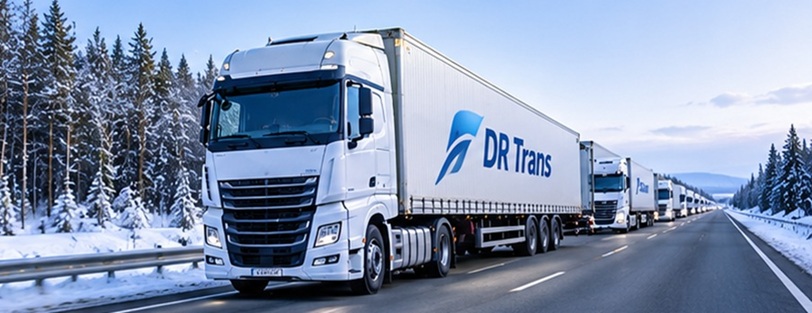
This is not automatically a disadvantage. What matters is whether the company is transparent about its role and can explain who is responsible for each stage of the shipment.
A logistics company may have extensive international freight experience, but that does not mean it is equally experienced on every route.
For example, transporting cargo from China to Russia involves different operational arrangements from shipping to Germany, Kazakhstan or Uzbekistan.
Before choosing a provider, ask questions such as:
Does the company regularly handle shipments to your destination country?
Can it arrange collection from your supplier's city in China?
What transportation routes are available?
Does it understand the relevant transit and border procedures?
Can it explain possible delays or restrictions along the route?
A useful way to assess its experience is to discuss a shipment similar to your own.
Suppose you are purchasing industrial equipment from a Chinese manufacturer and need delivery to Uzbekistan. Instead of asking only whether the company can transport machinery, ask how it would arrange vehicle allocation, cargo loading, cross-border transportation and final delivery.
A company with relevant operational experience should be able to discuss these details clearly.
DR Trans provides international freight solutions covering China–Russia, China–Europe and China–Asia routes. Its published services include TIR truck transportation, conventional road freight, railway transportation and multimodal solutions.
You can review the available options on the DR Trans international transportation services page.
One of the most useful questions to ask a freight forwarder is:
Who will physically transport my goods, and who will manage the shipment?
Some freight forwarders operate their own vehicles, while others work with contracted carriers or local partners. Larger logistics operations may combine both approaches.
Neither model should be judged by itself. Importers should focus on whether the transportation arrangements are suitable and clearly explained.
For road transportation, check:
Whether the company has its own fleet or uses partner carriers.
What types of vehicles are available.
Whether the vehicle can accommodate your cargo dimensions and weight.
Who arranges the driver and loading schedule.
Who is responsible for coordinating the shipment if the vehicle becomes unavailable.
For example, a shipment of industrial machinery may require a different vehicle configuration from a shipment of household appliances on standard pallets.
A freight forwarder should not confirm a vehicle arrangement without first understanding the cargo's actual dimensions, weight and loading requirements.
For companies handling regular shipments, it is also worth asking how vehicle capacity is arranged during busy periods.
A reliable logistics provider should not automatically recommend the same transportation method for every customer.
The right choice depends on cargo characteristics, delivery deadlines, destination, budget and the conditions of the route.
For example:
TIR road transport may be suitable for certain direct international road freight movements.
Railway transportation can be considered for suitable cargo when balancing transit time and transportation costs.
Sea freight may be appropriate for larger shipments where longer transit times are acceptable.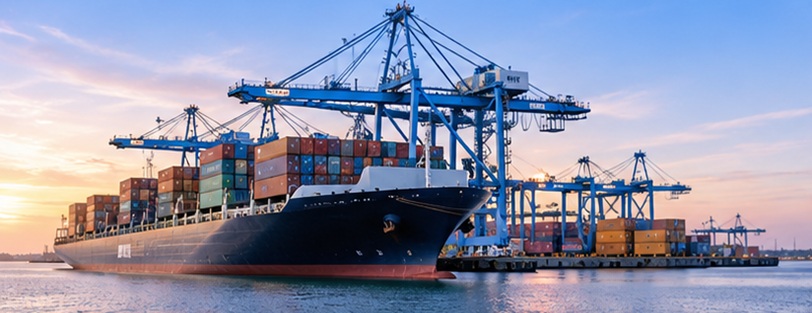
Air freight can be considered when delivery speed is a priority.
Multimodal transportation may be useful when a single transport mode cannot meet all requirements.
The important thing is not how many services a company advertises. It is whether it can explain why a particular solution is suitable for your shipment.
Ask the provider to compare the available options and explain their practical differences.
DR Trans offers road, rail, air, sea and multimodal transportation services. This allows customers to discuss different transportation arrangements according to their cargo and destination requirements.
Price is naturally an important consideration, but comparing two quotations without checking their service scope can lead to the wrong decision.
A lower quotation may exclude certain services that another provider has already included.
Before accepting an offer, check whether it specifies:
Cargo collection arrangements.
Main transportation charges.
Loading and unloading responsibilities.
Customs-related services, if applicable.
Transit or handling charges.
Final delivery arrangements.
Possible additional charges and the conditions under which they apply.
Also confirm the quotation's validity period and whether the price may change if the actual cargo details differ from the information originally provided.
Consider a company importing several batches of industrial materials from China. One provider may quote only for the main transportation leg, while another may include additional collection and delivery coordination.
Although the second quotation appears higher, it may represent a more complete service.
The best comparison is therefore not simply the lowest price, but the actual cost and service scope required to complete the shipment.
Good communication is easy to overlook when everything is going according to plan. It becomes much more important when something changes.
Before booking, find out how the freight forwarder will keep you informed.
For example:
Will you receive updates when the cargo is collected?
Can the company provide information about transportation progress?
Is GPS tracking available for the selected service?
Who should you contact if a shipment is delayed?
How will unexpected route or delivery changes be communicated?
Do not assume that every provider offers real-time tracking or a dedicated online platform. Ask what is actually available for your specific shipment.
For importers managing regular cargo deliveries, communication also affects inventory planning. If a shipment is delayed, the purchasing team may need to adjust warehouse arrangements or inform downstream customers.
A freight forwarder should have a clear communication process rather than leaving the customer to chase different parties for updates.
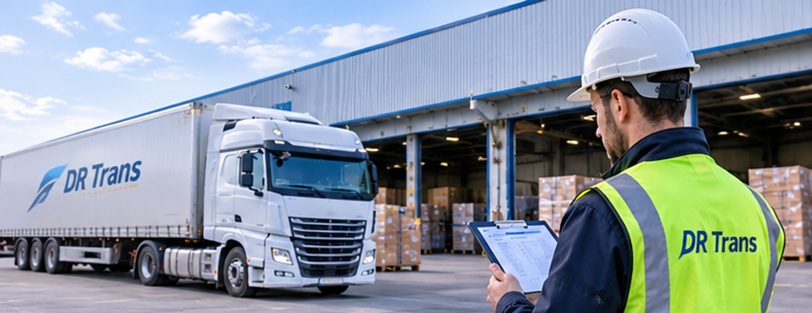
Another important area is understanding what happens if cargo is damaged, lost or delayed.
Importers should not assume that the freight forwarder automatically accepts every responsibility simply because it arranged the transportation.
Ask for clarification about:
The identity of the contractual carrier.
The freight forwarder's contractual role.
Applicable carrier liability rules.
Whether cargo insurance is included or optional.
How damage or loss should be reported.
The documentation required for a claim.
Cargo insurance and carrier liability are different matters. Insurance coverage depends on the policy terms, insured risks and exclusions. Carrier liability depends on the applicable legal framework and transport contract.
For international road freight, the CMR Convention may be relevant where the transport falls within its scope. Importers can consult the UNECE CMR Convention reference for the applicable legal framework.
Do not rely on verbal assurances such as "all cargo is fully protected." Ask for the actual insurance terms and written contractual conditions.
For businesses planning long-term cooperation, it may be sensible to begin with a manageable shipment rather than immediately transferring all transportation business to a new provider.
A first shipment can help you evaluate how the company performs in practice.
Pay attention to:
Whether the agreed collection arrangements are followed.
Whether the vehicle and service match the original quotation.
Whether shipment updates are provided as promised.
How quickly questions are answered.
Whether unexpected issues are communicated and addressed.
Whether the final charges match the agreed terms.
After delivery, review the experience with your purchasing and logistics teams.
For regular shipments, you can also establish performance indicators such as delivery schedule adherence, response time, cargo condition and quotation accuracy.
These records provide a more useful basis for future cooperation than a sales presentation or a single attractive quotation.
During the selection process, pay attention to the following situations:
| Warning sign | Why it matters |
|---|---|
| The company cannot explain its actual role | You may not know who is responsible for transportation |
| It cannot demonstrate experience on your route | Operational arrangements may be uncertain |
| It offers a quotation without understanding the cargo | The proposed vehicle or price may be unsuitable |
| Additional charges are not explained | The final cost may differ from the original offer |
| It makes unrealistic delivery promises | Transit schedules depend on actual route conditions |
| It cannot explain its liability arrangements | You may face difficulties when a problem occurs |
A professional logistics provider should be willing to discuss these questions before accepting an order.
Choosing a freight forwarder requires more than checking its website, comparing prices or reading customer reviews.
Importers should verify the company's business background, route experience, actual transportation resources, service arrangements, communication process and contractual responsibilities.
For businesses shipping from China, these checks are especially useful when transporting machinery, household appliances, industrial materials and other commercial cargo across multiple countries.
At DR Trans, we provide international transportation solutions through our road, TIR truck, railway, air, sea and multimodal services. Our own TIR truck fleet and logistics team support international road transportation arrangements across relevant routes.
We understand that every shipment has different requirements. The appropriate transportation solution depends on the cargo, pickup location, destination and delivery schedule.
Planning your next shipment from China?
Contact DR Trans with your cargo details, pickup location, destination and expected shipping schedule. Our team can review your requirements and discuss suitable transportation options for your business.

 IPv6 ПОДДЕРЖИВАЕТСЯ СЕТЬЮ