
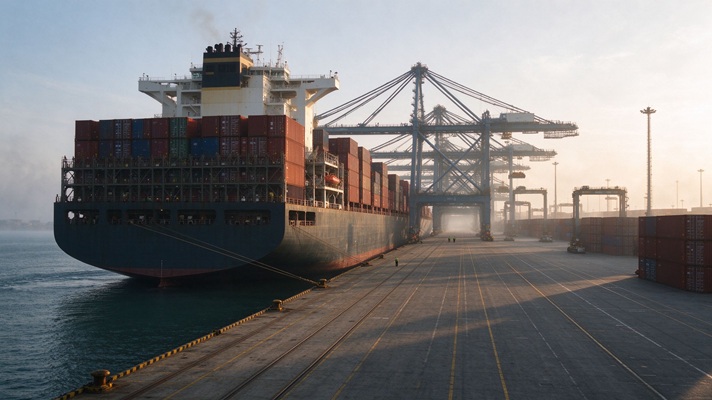
In international trade, a Bill of Lading (B/L) is one of the most important shipping documents used to manage cargo transportation by sea. It serves as evidence that goods have been received by the carrier, provides details of the contract of carriage, and, depending on its type, can also function as a document of title.
For importers and exporters, understanding the meaning of a Bill of Lading is essential when arranging international shipments, preparing shipping documents, managing payments, and collecting goods at the destination.
However, a Bill of Lading is not used for every transportation method. Sea freight, air freight, road freight, and rail freight each have their own transport documentation requirements.
This guide explains what a Bill of Lading is, its main types, the information it contains, and how it differs from other international shipping documents.
A Bill of Lading (B/L) is a transport document issued by a shipping carrier or its authorized agent for the carriage of goods, primarily by sea.
It has three principal functions:
1. Receipt of Goods
The Bill of Lading confirms that the carrier has received the cargo. Depending on the document, it may confirm receipt for shipment or confirm that the goods have been loaded on board the vessel.
2. Evidence of the Contract of Carriage
It records important information about the transportation arrangement, including the shipper, consignee, cargo details, loading port, and destination port.
3. Document of Title
Certain negotiable Bills of Lading represent title to the goods. The lawful holder of such a document may have the right to claim or transfer the cargo, subject to the document's terms and applicable law.
For example, when a Chinese manufacturer exports products to a buyer in Germany, the shipping carrier issues a Bill of Lading after receiving or loading the cargo. The document identifies the shipment and provides important information for the importer to arrange cargo collection.
It is important to distinguish between negotiable and non-negotiable transport documents because not every B/L provides the right to transfer title to the goods.
The United Nations Economic Commission for Europe (UNECE) provides further information about the different types and functions of international transport documents in its Waybill Business Requirements Specification.
A Bill of Lading contains essential details about the shipment and the parties involved in the transportation process.
Although the exact format may vary between shipping companies, most B/L documents include the following information:
| Document Field | Meaning |
|---|---|
| Shipper | The company or individual sending the goods |
| Consignee | The named party receiving the cargo |
| Notify Party | The party to be notified about the shipment's arrival |
| B/L Number | The unique identification number of the document |
| Vessel Name | The name of the vessel carrying the cargo |
| Port of Loading | The port where the cargo is loaded |
| Port of Discharge | The port where the cargo is unloaded |
| Description of Goods | Details of the products being transported |
| Number of Packages | Total number of cartons, pallets, or other packages |
| Gross Weight | Total cargo weight including packaging |
| Container Number | Identification number of the shipping container |
| Freight Terms | Information about freight payment arrangements |

Incorrect information can create problems during international shipping.
For example, if the consignee's company name does not match the relevant commercial documents, the importer may need to request corrections before the cargo can be released.
Similarly, differences in cargo descriptions, quantities, or weights may lead to additional document checks and communication with the carrier.
Before a Bill of Lading is finalized, importers and exporters should verify that its information is consistent with the commercial invoice, packing list, and other relevant shipping documents.
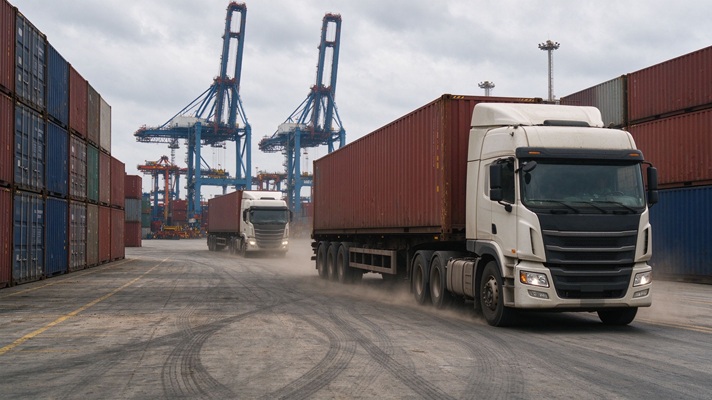
There are several types of Bills of Lading used in international shipping. They differ according to transferability, issuance arrangements, and the status of the cargo.
Understanding these differences helps businesses select the appropriate document for their trade transactions.
A Straight Bill of Lading is a non-negotiable document issued to a specifically named consignee.
The cargo is delivered to the named receiving party after the carrier's applicable delivery requirements have been satisfied.
This type is commonly used when the buyer and seller already have an established commercial relationship and there is no need to transfer the transport document to another party.
An Order Bill of Lading is a negotiable document that can be transferred through endorsement and delivery in accordance with its terms.
It is often used in international trade transactions involving documentary credit or payment arrangements.
For example, an exporter may retain control of the original B/L until the buyer fulfills the agreed payment conditions. The document can then be endorsed and transferred to the appropriate party.
This arrangement provides an additional level of control over cargo release.
A Bearer Bill of Lading is structured so that the person holding the properly issued document can claim the goods, subject to applicable legal requirements.
Because possession of the document is central to the delivery process, this type requires particularly careful handling and security.
A Master Bill of Lading is issued by the shipping line or vessel-operating carrier to the freight forwarder or other contracting party.
It generally covers the main transportation arrangement between the carrier and the contracting party.
A House Bill of Lading is issued by a freight forwarder to its customer, usually the exporter or shipper.
When a freight forwarder consolidates cargo from different customers, it may issue individual HBLs while receiving a corresponding MBL from the shipping line.
The MBL and HBL represent different contractual relationships within the same shipping arrangement.
Bills of Lading can also be classified according to the cargo receipt and its condition.
Shipped on Board B/L: Confirms that the goods have been loaded onto the named vessel.
Received for Shipment B/L: Confirms that the carrier has received the goods for shipment but does not necessarily confirm that they have already been loaded.
Clean B/L: Indicates that the document contains no adverse notation concerning the apparent condition of the goods or packaging.
Claused B/L: Contains remarks about apparent damage, defective packaging, or other observed conditions.
These classifications can be important when banks, buyers, or sellers require specific shipping documents under a sales contract.
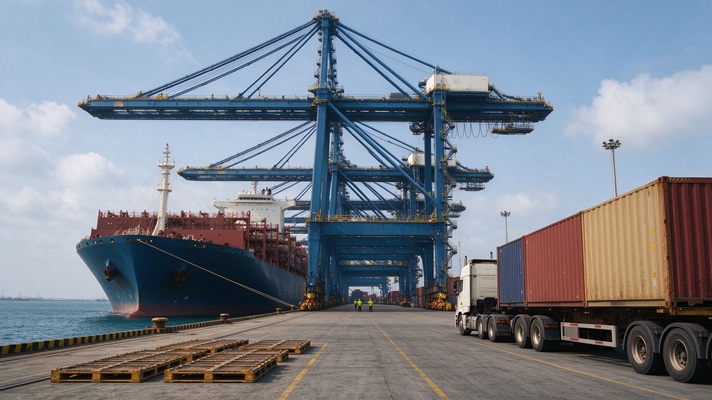
A Bill of Lading and a Sea Waybill are both used in international sea freight, but they have different legal and operational characteristics.
The main difference is that certain Bills of Lading are negotiable documents of title, while a Sea Waybill is non-negotiable and does not function as a document of title.
| Comparison | Bill of Lading (B/L) | Sea Waybill |
|---|---|---|
| Evidence of cargo receipt | Yes | Yes |
| Evidence of carriage contract | Yes | Yes |
| Document of title | Certain types | No |
| Negotiable | Depending on type | No |
| Transferable through endorsement | Certain types | No |
| Original document for cargo release | Often required for negotiable original B/L | Generally not required |
| Typical application | Trade involving document control | Shipments between established business partners |
A negotiable Bill of Lading may be appropriate when the transaction involves a Letter of Credit (L/C), payment security, or the transfer of the document to another party.
A Sea Waybill is often more convenient when the buyer and seller have an established relationship and there is no need to transfer title through an original transport document.
The final choice should be agreed upon by the buyer, seller, and carrier before shipment.
The Bill of Lading connects the physical movement of goods with the commercial and legal arrangements behind an international shipment.
Its importance extends beyond simply confirming that cargo has been loaded.
The B/L provides a formal record of the cargo received by the carrier.
It allows the parties involved to verify shipment details, including package quantities, cargo descriptions, and transportation destinations.
The document records important information about the transportation arrangement and may serve as evidence if disputes arise concerning cargo delivery, loss, or damage.
Its legal effect depends on the applicable law and the terms of the document.
For shipments covered by negotiable original Bills of Lading, the appropriate original document is generally required to obtain cargo release.
This helps control who is entitled to claim the goods.
For non-negotiable documents, such as a Sea Waybill, carriers generally follow different cargo release procedures.
Bills of Lading are frequently used in international transactions involving Letters of Credit.
Banks may require specific B/L details when checking shipping documents against the conditions of a documentary credit.
If the document does not meet the agreed requirements, payment processing may be delayed or affected.
Information from the B/L may be used alongside commercial invoices, packing lists, certificates of origin, and other documents during import and customs procedures.
However, a Bill of Lading does not replace customs declarations, import licenses, or other mandatory documents.
No. A traditional maritime Bill of Lading is not required for every international shipment.
The transport document depends on the mode of transportation and the applicable legal and contractual requirements.
Different transportation methods use different documents:
| Transportation Method | Common Transport Document |
|---|---|
| Sea Freight | Bill of Lading (B/L) or Sea Waybill |
| Air Freight | Air Waybill (AWB) |
| International Road Freight | CMR Consignment Note |
| International Rail Freight | CIM or SMGS Consignment Note |
| Multimodal Transport | Multimodal Transport Document |
For example, a company importing goods from China to Europe by sea will normally receive a B/L or Sea Waybill from the shipping carrier.
However, when goods are transported across borders by truck, a CMR consignment note is generally used where the CMR Convention applies.
The UNECE provides an official explanation of the CMR Convention and international road transport documentation.
Understanding which document applies to each transportation method helps businesses prepare the correct paperwork before cargo departure.
A Bill of Lading and a CMR consignment note are both important international transport documents, but they serve different transportation methods.
A B/L is primarily associated with maritime shipping, while a CMR consignment note is used for international road transportation under the CMR framework.
The main differences are:
| Comparison | Bill of Lading (B/L) | CMR Consignment Note |
|---|---|---|
| Main transport mode | Sea freight | International road freight |
| Main purpose | Cargo receipt and evidence of carriage | Evidence of road carriage and cargo receipt |
| Document of title | Certain types | No |
| Negotiable | Certain types | No |
| Main parties | Shipper, carrier, consignee | Sender, carrier, consignee |
| Typical application | International maritime trade | Cross-border truck transportation |
For businesses shipping goods from China to Russia, choosing the correct transport documentation is particularly important.
When cargo is transported by sea, the relevant shipping documents normally include a B/L or Sea Waybill.
When goods move by international road freight, the documentation generally includes a CMR consignment note, together with applicable customs and transit documents.
For TIR shipments, the TIR Carnet is also an important customs transit document. It is not a replacement for the CMR consignment note.
Businesses arranging cross-border road transportation can explore DR Trans China–Russia TIR transport services to learn more about the road freight solutions available for international cargo movements.
Even experienced importers and exporters can encounter documentation problems when managing international shipments.
The following mistakes deserve particular attention.
Incorrect Shipper or Consignee Details
Company names, addresses, and receiving-party information should be checked carefully before the document is finalized.
Inconsistent Cargo Information
The cargo description, package quantity, and gross weight should match the relevant commercial and shipping documents.
Selecting an Inappropriate B/L Type
A negotiable Order B/L and a non-negotiable Straight B/L have different commercial implications. The selected document should match the payment arrangements and delivery requirements.
Failing to Check the Original Document Requirements
Some shipments require original negotiable Bills of Lading for cargo release. Losing or delaying these documents may create additional procedures and costs.
Ignoring Document Requirements for Different Transport Modes
A Bill of Lading, CMR, and Air Waybill are not interchangeable. Importers should confirm the correct document with the carrier or freight forwarder before shipment.
Overlooking Cargo Condition Remarks
When cargo or packaging has visible damage before loading, the relevant observations should be recorded accurately. A clean B/L should not be requested when the carrier has legitimate reasons to make adverse remarks.
A careful document review before departure can help reduce avoidable delays and disputes.
Choosing the correct shipping document starts with understanding the transportation arrangement.
Before confirming a shipment, businesses should consider several factors.
Transportation Method
Confirm whether the cargo will move by sea, air, road, rail, or a combination of transportation methods.
Destination Requirements
Check the import documentation requirements of the destination country and any transit countries involved.
Payment Arrangements
Determine whether the sales contract or Letter of Credit requires a specific type of Bill of Lading.
Cargo Ownership and Release Conditions
Understand who is entitled to collect the cargo and whether original documents or electronic release procedures are required.
Carrier and Freight Forwarder Responsibilities
Confirm which party issues the transport document and who is responsible for coordinating the related documentation.
For companies using different transportation methods, working with an experienced freight forwarder can make document coordination easier.
DR Trans provides international freight solutions covering road, rail, air, sea, and multimodal transportation. Businesses can explore our international freight transportation services to understand the available options for different shipping requirements.
A Bill of Lading is a fundamental document in international sea freight. It serves as evidence of cargo receipt and the contract of carriage, while certain negotiable types also function as documents of title.
However, it is important to remember that different transportation methods require different documentation.
Understanding the differences between B/L, Sea Waybill, CMR, AWB, and rail consignment notes helps importers and exporters manage shipping procedures more effectively and avoid unnecessary documentation problems.
For businesses shipping goods across international borders, choosing the right transportation partner is just as important as preparing the correct documents.
DR Trans specializes in international freight transportation, with a strong focus on China–Russia TIR road transport. With its own truck fleet, customs brokerage support, and shipment monitoring, DR Trans helps businesses coordinate cross-border cargo transportation and related transit arrangements.
Whether you are planning sea freight, rail transportation, or direct TIR truck delivery, our team can help evaluate your cargo requirements and identify a suitable transportation solution.
Planning an international shipment? Contact DR Trans for a freight quotation.
Provide your cargo description, loading location, destination, weight, volume, and expected shipping date.
Our team responds to inquiry forms within 15 minutes.
DR Trans — Your Partner for International Freight Transportation.

 IPv6 ПОДДЕРЖИВАЕТСЯ СЕТЬЮ